How evidence-based are the Conservative manifesto proposals on grammar schools? Not at all, says a Professor at the UCL Institute of Education, as she digs into the DfE’s own figures.
Professor Alice Sullivan of the UCL Institute of Education was ‘amazed’ at the claim in the 2017 Conservative Party Manifesto that ‘slightly more children from ordinary, working class families attend selective schools as a percentage of the school intake as compared to non-selective schools’. So she dug into the evidence offered and discovered that this claim goes ‘beyond selective use of evidence, and enters the territory of statistical jiggery-pokery’.
Read about this on the IOE London blog. The ‘UK’s leading centre for education research’ is a rather more reliable source of evidence than ‘statistical jiggery-pokery’.
Yesterday I emailed Andrew Bingham, Conservative candidate for the High Peak and MP, 2010-17, about his party’s policy on grammar schools. His reply was commendably prompt – but strangely equivocal.
Here’s the text of our exchange:
Dear Mr Bingham
As you say in your campaign leaflet, ‘this election has come as a surprise to all of us,’ particularly as the Prime Minister had previously set her face against such a move. Coinciding as it has with a holiday ending at the weekend, it has also left me only a short time to consider what the local candidates are offering.
As you may recall, I have contacted you previously about Conservative education policies. Most recently this was about the White Paper on forced academisation. Almost before you had opportunity to reply, that policy appeared to have been kicked into the long grass. Now I see that, although though your own leaflet has little on specific policies, your party’s manifesto promises to open the way to the creation of more grammar schools.
As a former teacher, with experience of working in secondary modern, grammar and comprehensive schools, and now as a school governor, I should be interested to know whether you support the creation of one or more grammar schools in the High Peak. Would there be a grammar school for Glossop, for example? Or would students have to travel to Buxton or further afield? How many secondary modern schools do you think we shall need? You might perhaps be able to say what percentage of pupils would be able to attend the grammar school, and how those at the secondary modern schools might be prepared for the modern world.
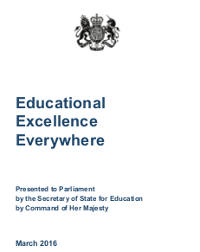
You may be aware that the recently retired Chief Inspector of Schools, Sir Michael Wilshaw (himself a former headteacher) has strongly opposed the creation of more grammar schools, as has the previous Secretary of State for Education, Nicky Morgan. There is also a wealth of education research that casts doubt on claims that grammar schools lead, in the word of the green paper, to ‘Education Excellence Everywhere’ [I should have used the title of the grammar school consultation, Schools that work for everyone – Education Excellence Everywhere was the now-defunct academisation White Paper]. Do you have counter arguments to offer?
I realise that I have asked a series of detailed questions to which you may not have all the answers. Since this is in your party’s manifesto, however, I think we need to be told how it will affect children in our town – or whether it is a gimmick for a few areas with little national impact or benefit.
I look forward to hearing from you.
This was his reply this morning:
Dear Mr. Rank,
Thank you for your email. With regard to grammar schools I have no fixed view at this stage. I can see both the benefits and disadvantages. What Theresa has said is that a Conservative Government would look to lift the ban on the creation of grammar schools, there will be no compulsion on schools to become grammar schools. I have said to people who have asked me that I would look very carefully at any proposals to see if they would be something I could support. I went to what was then Long Lane Comprehensive School, now Chapel High, so I have no first hand experience of the grammar/secondary modern system but I would be very interested if re-elected and when any proposals come forward, to speak to you in greater depth on the matter.
You are correct in your recollection on compulsory academisation, I was against this at the time and welcomed the change in heart to this as I, together with other colleagues, had expressed our opposition to it.
We do not know what the result will be on Thursday, either locally or nationally, however, if I am successful I can give you an undertaking that I would be very happy to meet with you personally to get your views on the contents of any proposals so that I can get a better insight into your thoughts as someone who has worked in the sector and has a more detailed knowledge than I.
Kind regards,
Andrew
I have now replied to say that though his approach to his party’s manifesto is interesting, it hardly indicates support for an election promise. Anecdotes and personal experience can be a useful way into the argument, but they aren’t a secure basis for national policy – especially when based on memories many years old. If MPs are interested, the evidence that counts is already in the public domain. Here are a few links:
The Department for Education conducted a consultation on grammar schools under the (surely ironic) title ‘Schools that work for everyone’ which ended on 12 December 2016 – yet the results have still not been published. Well-substantiated rumour has it that this may be because responses were overwhelmingly critical. Time for a re-think, or even a U-turn?
UPDATE: 9 June 2017: Conservative MP no more
I shan’t after all need to meet Andrew Bingham to explain the fallacies in the Conservative grammar school policy, as he was last night defeated in the general election and the new MP for High Peak is Labour’s Ruth George. If the Tories hang on in a hung parliament, it will be interesting (if depressing) to see whether the argument over grammar schools needs to continue.
What’s the evidence and what the ideology in the academies debate?
The Education White PaperI’ve just written to my MP to express my concerns about the plan, announced in this year’s Budget, to compel all schools to become academies by 2022. This (with the name of the school itself removed – this isn’t about one particular institution) is my letter:
Dear Mr Bingham
I was interested to read your article in last week’s Glossop Chronicle about the move to compel all schools to become academies. I hope that this might reach you before the 1922 Committee meeting today where the Secretary of State for Education will give account of her plans to turn every school in England into an academy.
I am Chair of Governors of a primary school in your constituency and have had the pleasure of meeting you at the school when you took the time to talk to pupils about your role as MP – a good example of the ways in which the school seeks to provide an excellent and relevant education for all pupils. I write in a personal capacity, though I know many of my fellow governors are also anxious about the proposal.
I share your concerns about this imposition of change and hope that you will use your influence to persuade the Secretary of State to think again about the plan. As a former local councillor, you will be aware of the importance of local accountability and expertise. As school governor, I have found the support of both elected members (of all parties) and local officers in Derbyshire to have been of great value in helping the school improve; it is perhaps the reason why the County has one of the lowest rates for academy conversions in the country, with fewer than 10% of its schools academies.
You ask for the decision to made on ‘practical grounds’ and I consider that there are many solid reasons why this planned re-organisation is unwise:
Excellence: the White Paper seeks Education Excellence Everywhere, yet the results of the academy process so far are patchy. The best academy chains are almost all located in London and the South East; Her Majesty’s Chief Inspector of Schools recently condemned many academy chains and trusts as being worse than the LAs they have replaced. Repeatedly, researchers have been unable to show that the academy route produces better results. ‘We certainly have no evidence for primary schools,’ Professor Machin told the BBC when asked whether academies raise standards. The report this week from the Local Government Association is just the latest of these; Ofsted and the Education Select Committee have also pointed out that academies do not produce better results when the data is examined carefully rather than cherry-picked and illustrated by anecdote.
Capacity: with 80% of primary schools still to convert, does the DfE have the capacity to cope in the next four to six years? The recent criticisms of the DfE’s accounts for multiple lapses do not bode well. The National Governors’ Association is just one of many respected organisations to question whether there is the capacity to cope with this huge change.
Cost: at times of straitened spending and rising costs, including recent pension contribution increases – as governors, we have to balance the books and go through the accounts in detail – is it right to spend so much on a change that many schools do not appear to want? The cost has been estimated at something in the region of £1.6 billion: schools could spend that on a great deal of much needed equipment, extra staffing and professional development that would be much more likely to produce better results.
Autonomy: much is made of the benefits of autonomy for individual schools and teachers. However, schools in England have for at least 25 years had great freedom under local management of schools – it is inaccurate to describe St Luke’s as an ‘LA-run school’ as though County dictated policy, curriculum and practice. Governors have, for example, played a very active part in assessing best value for services and as a result we buy support from a variety of sources, both County and private. Headteachers in Academy Chain and Multi-Academy Trusts have repeatedly confirmed that individual schools and leadership teams will actually have less freedom in the academy system. The Regional Schools Commissioner who will run schools in the East Midlands and Humber Region will be just as much of a ‘bureaucrat’ as the LA officers he or she replaces – and more remote and less accountable.
For these and many other practical reasons I do not believe that compelling successful and well-run Derbyshire schools to convert to academy status will be anything other than a distraction from their responsibility to provide an excellent education for the children in their care. If anything is ‘ideological’ about the debate, it would seem to be the belief against the weight of the evidence that this huge and draining upheaval will magically improve our schools.
I shall be happy to discuss this further with you and provide the sources of my statements in this letter should you wish.
This post is first for the lovely, lively children at St Luke’s School. We’re getting stuck into some computing with the Raspberry Pi computers we won for doing so well at the Hour of Code last year. But sometimes one of us (let’s be honest, usually one of the leaders) needs a little reminder or help.
So here are some great sites with short videos, helpful tips and even ready-to-roll software. Try them at school or at at home!
Adventures in Raspberry Pi: we have our own copy of this book so you can find out more in ICT Club. Take a look at the videos at the bottom of the page – they should give you plenty of ideas.
Scratch ideas – which will work on your netbook or laptop too:
Scratch Your Nose: great ideas for Red Nose Day, with videos to show you how to make them in Scratch.
Our MPs are Lenininst in their belief that politics is all and excludes a rich artistic life. It’s a sign of a failed society
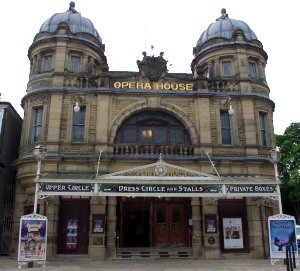
Well, I can report that at least in deepest Derbyshire, things aren’t so philistine. The opening night of this year’s Buxton Festival was graced by the new (Labour) Chair of Derbyshire County Council, who far from seeming embarrassed, flaunted his allegiance with a striking red jacket. The fare may have been Saint-Saëns and Gounod rather than Wagner, but as someone who tends to Rossini’s view of Wagner (‘great moments but dull quarter hours’), that to my mind was no bad thing. Lenin may not have dared to listen to Beethoven often (poor man) but it seems he also liked plays – last night I saw Ostrovsky’s Too Clever by Half in a suitably manic production at Manchester’s Royal Exchange Theatre and discovered that in 1918 Lenin attended and admired the Moscow Art Theatre production starring Stanislavski, seeing it ‘as a portrait of the moral and intellectual failings of the society created under the Tsars’. Perhaps that’s what our politicians can do best for culture – provide the butts for satire?
As befits one of the birthplaces of Chartism, Manchester has long been a place where culture and politics mix. For many years the concert hall, home to the Hallé Orchestra, was the Free Trade Hall, built to commemorate a notorious attack on peaceful protest (which led, amongst other things, to the Manchester Guardian and Shelley’s Mask of Anarchy). The hall was the venue for both high culture (Barbirolli etc) and wrestling. Its replacement, the much more comfortable Bridgewater Hall, is a wonderful concert hall but rather tamer.
As for politicians, others here have already indicated that a few cabinet ministers have betrayed a liking for Wagner. Amongst them is Michael Gove, the minister most likely (pace Martin) to lace his speeches with quotations from (in his words) ‘the best that has been written and said’. If that sometimes means misquotations from Keats (it’s ‘Beauty is truth, truth beauty,’ Michael: and you an English graduate!), I suppose we should be grateful. Mr Gove has even shared his admiration of Antonio Gramsci and declared in the Guardian’s own pages this week that ‘classical Marxists support free schools because they embody the ideal of the soviet, a self-managing institution run by workers in the wider public interest’. Such erudition, you see, Martin! What would your old Dad have made of that? I suspect he might have pointed out that the governance of free schools is hardly as open and free as a soviet, or even one of those local authority schools the Secretary of State appears to despise, despite his nominal responsibility for the education of all students in England. I certainly hope Professor Kettle would have seen off such dubious claims to cultural eclecticism.
Having just posted my two penn’orth to Comment is Free, I spotted that tomorrow’s paper will include a number of letters about the Secretary of State’s claims in Thursday’s edition. These include Professor Norman Thomas:
If free schools are doing well (except for some) because they are free from local authority control and can decide things for themselves, does that mean Gove will now introduce a bill bringing the national curriculum to an end instead of extending it, as he currently proposes, even including pressure on how to teach reading – by synthetic phonics? The national curriculum does not have to be taught in free schools or academies, any way, so why impose it on local authority schools?
Surely a Marxist of Mr Gove’s intelligence cannot be so confused as to advocate freedom for schools and at the same time deny it.
Gove: School governors are ‘local worthies seeking a badge of status
Waffling? Surely only politicians are allowed to do that? Michael Gove holds forth: read a riposte from Francis Gilbert here.As a school governor, you can imagined how cheered I am this morning to learn that this headline appears on the front page of the Times website [paywall]: ‘School governors condemned by Gove: School governors are ‘local worthies seeking a badge of status and the chance to waffle about faddy issues”‘.
I fear I’m not willing to pay News International to read the full article, but am not surprised to see that Michael, as a former Times journalist (and married to Sarah Vine, currently on the staff), has ensured a front page story on his own paper once again, as well as copious coverage in the Telegraph and the BBC.
I picked this up from Warwick Mansell, who also reports ‘Emma Knights, of National Governors’ Association, says: “We’ve had a lot of talk from Michael Gove about governance but not very much about how to improve things…”‘ Emma Knights told the BBC her organisation was ‘incredibly disappointed by the language of the secretary of state’.
It seems Michael Gove has also had a pop at teachers (‘NUT “embracing Trotskyism” at national conference’), so he’s trotting out popular targets (trotting out Trots – see what I did there?) to endear him to his fellow-travellers in The Party. Well, as we know, if the Dear Leader doesn’t like governors, he can sack them and appoint his own – does that make the new ones waffling worthies too?
Meanwhile – and I fear to depress you more, but as I’m in waffling mood –
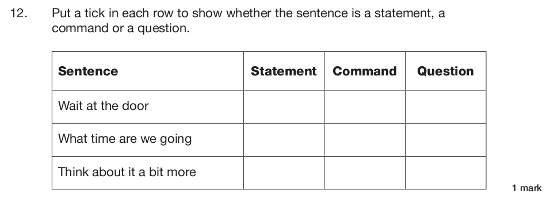
One responsibility of school governors is to ensure the reporting of statutory tests, such as the recent phonics test for 6 year olds. The DfE’s planned Key Stage 2 English grammar, punctuation and spelling test materials for 2013 are now online here (see the bottom of the page). Geoff Barton, a secondary head, was moved to comment: ‘Look at question 12 and imagine how children will be taught. Read, then weep.’ Wait at the door? Whatever for? Ah: think about it!
Of course, this is really just another faddy issue we shouldn’t waste our time waffling about.
Stop press: There’s more on Michael Gove’s speech in the Telegraph today, where his claims that boards of governors resemble ‘Victorian parochial church councils’ is accompanied by an attack on the National Association for the Teaching of English as well (in the process getting the name slightly wrong – well, that’s journalists for you). This calls for a separate post, had I but world enough and time….
But Francis Gilbert has written a detailed response, complete with a refutation of his slur on NATE, here.
Michael Gove and Rupert Murdoch express an interest in online learning.
I look into classrooms and they're positively Victorian!The front page of the Guardian today carried an article by David Leigh about the Secretary of State which included specific reference to the ambitions of Rupert Murdoch to profit from online learning. It’s headlined ‘The schools crusade that links Michael Gove to Rupert Murdoch’. As an aside, Mr Gove, as the author of a book about Islam, might consider the word crusade a little tasteless.1
One interesting passage refers to
…the extraordinarily close links that still exist between publishing tycoon and Tory politician. One of Murdoch’s long-term projects is what he calls a “revolutionary and profitable” move by his media companies into online education. Gove would be a key figure in any attempt to penetrate the British schools market.
And the evidence is:
On 19 May, Gove breakfasted with Murdoch in London. The tycoon flew on from that meeting to address a Paris conference of internet entrepreneurs. This time, he went into some detail about News Corp’s plans for educational technology. He and Klein had been touring educational projects around the world, in South Korea, Sweden and California. Schools were the “last holdout from the digital revolution” he said. “Today’s classroom looks almost exactly the same as it did in the Victorian age… The key is the software.”
The fundamental model of school education is still a teacher talking to a group of pupils. It has barely changed over the centuries, even since Plato established the earliest ‘akademia’ in a shady olive grove in ancient Athens. A Victorian schoolteacher could enter a 21st century classroom and feel completely at home.
Now who do you think is copying the homework, children?
As presented to Michael Gove!Does this suggest a reason for the recent interest by the DfE in technology in schools? In the early days of the coalition, having immediately abolished the education technology agency Becta, it seemed ICT in schools was deemed peripheral at best. Now it seems that Mr Gove is asking, ‘What can technology do for learning?’ The answers in his BETT address are revealing: ‘disseminate learning…. think about how we teach… unprecedented opportunities for assessment’. Well, it’s a start, if a rather limited one – which is why I gave him a copy of our book, Teaching English Using ICT, to show him that English teachers have been thinking about this for a long time already. What’s that? You’d like a copy as well? Oh, all right then….
An open-source curriculum?
In calling for ‘an open-source curriculum’, mind you, Mr Gove might not entirely please his former employer and continued friend Mr Murdoch. For in that same speech to the G-8 Forum in Paris referred to earlier, Rupert Murdoch opened by making a strong plea for copyright law:
We hope the G-8 will strongly affirm that the property rights of artists and creators are more than a matter of protecting cultures. In this new century, they are essential requirements for a dynamic economy and the digital future.
Open source software is software which can be used, modified and improved by anyone and can be redistributed freely.
Such a philosophy might not always sit easily with those who see education as a ‘revolutionary and profitable’ market, might it? And that’s before we get to the purists of the Free Software Foundation. Still, taking open source seriously, using free software and publicly-funded and freely available content might save schools a lot of money, mightn’t it? Now that might be ‘revolutionary and profitable’, though more in the spirit of Paris 1789 or 1968 than G-8 Paris 2011….
Rupert Murdoch, the considerate employer
Mr Gove might feel kindly towards Mr Murdoch for a number of reasons. Weary hacks eking out a living in their drafty garrets might be just a little jealous at two further tid-bits in the Guardian story, which shows that ‘Murdoch in turn was kind to his former employee’:
When Mr Gove was a backbench MP, The Times topped up his salary with a £60,000-a-year column. Nice work if you can get it – and something covered here in a blog post last July.
Murdoch’s publishing arm, HarperCollins, also gave Mr Gove a book advance in 2004 for a history of an obscure 18th-century politician, Viscount Bolingbroke. ‘Puzzlingly,’ David Leigh writes, ‘the book was never delivered.’ What a fine example to set to the children! Well, Miss, that Mr Gove never did his ‘omework neither!
Film least likely to win an Academy Award?
Still, let’s look on the bright side – the Guardian last weekend carried a cartoon by Stephen Collins on films least likely to win an Academy Award. One was Gove: ‘he was a British public figure, but he had a human side too’ (‘extremely detailed… very long indeed’)
Fanciful? Not for Toby Young! In case you weren’t among the 3.26 million who bought the Sun on Sunday, I’ve read it for you – well the bit where Toby Young waxes lyrical about the Secretary of State:
1After all, Michael Gove’s Celsius 7/7, published in 2006, ‘argues that Islamists are waging “total war” against the west, not because of imperialism but because of their root-and-branch rejection of “western values”,’ according to Richard Seymour). I’m afraid that another reviewer found this ‘perfervid pamphlet… remarkably trite’. Harsh words indeed! If you want to judge for yourself, Celsius 7/7 is available from Amazon from only £0.01.
Prime Minister? Me? Now there's a thought!This Thursday’s Thought is raised by an article in the Independent by John Rentoul: what’s a ‘retail politician’? Perhaps, in contrast to a second-hand car salesman, estate agent, etc, someone you’d buy a policy from?
Not, at least, the kind derided by Lear:
Get thee glass eyes;
And, like a scurvy politician, seem
To see the things thou dost not.
Not that it’s stopped The Telegraph using those very words about the current Prime Minister in an article entitled ‘Why shouldn’t David Cameron holiday in Tuscany?‘ (yes, that’s a thought for another Thursday):
They’d conclude that Cameron was just another scurvy politician, posing as a man of the people when, in reality, he’s a well-heeled member of Britain’s plutocratic elite.
Whatever the answer, it seems that Michael Gove ‘is not a retail politician on television’. Ah – so it’s how you look under the studio lights that matters? Still, according to John Rentoul, he still ‘could be prime minister’.
How far will Collins go to promote their new dictionary?
This Thursday’s Thought from Word of the Day asks: who’d be a mumpreneur; or, how far will Collins go to promote their latest dictionary? From Arab Spring to Zumba, apparently (taking in Boris bikes, casino banking and unfollow along the way), according to an article in today’s Guardian.
Serious wordsmiths (and pedants) have already begun to discuss the merits (and otherwise) of these (and other) neologisms in the comments on the article – an example of clicktivism, perhaps? One (R042) sagely comments:
Neologisms which aren’t euphonious or widely useful won’t become popular, but their existence is nothing to be worried about.
So whilst mumpreneur might fade, I fear casino banking will go on….
Who does ‘the shattered visage’, with its frown, its wrinkled lip and its sneer of cold command, remind you of? Yes, Rupert Murdoch is finding out that one of the unacknowledged legislators of the world had described his fate long ago, as Simon Hoggart points out in today’s Guardian:
It’s as if we were all in Shelley’s antique land watching the statue of Ozymandias collapse before our eyes.’

 Well, I can report that at least in deepest Derbyshire, things aren’t so philistine. The opening night of this year’s Buxton Festival was graced by the new (Labour)

 is available from Amazon from only £0.01.